

If the previous three stories allow for ambivalence about the oven element, today’s story centers the oven element in a way that intensifies the ambivalence. It concerns Rabbi Zeira, a third-generation Amora who migrated from Babylonia to Eretz Israel. To the extent that all the stories about him describe a coherent, single personality (which some have disputed over the centuries), he had a busy and storied life in Babylonia, including a story in which he was slaughtered by Rabba at a Purim party in which they both got drunk but then revived by him. He also sent away a golem that Rava made, which makes him a demon slayer of sorts (b.Sanhedrin 65b). In Toldot Tannaim ve-Amoraim, a 1910 compendium of characters from rabbinic literature, Aaron Hyman relates that Rabbi Zeira was very desirous to move to Eretz Israel and often praised it as holy and inspiring piety, and ended up immigrating against the opinion of his teacher, Rav Yehuda. The story tells of what happened when he got there:
רַבִּי זֵירָא כִּי סְלֵיק לְאַרְעָא דְיִשְׂרָאֵל יָתֵיב מְאָה תַּעֲנִיָּתָא דְּלִשְׁתַּכַּח תַּלְמוּדָא בַּבְלָאָה מִינֵּיהּ, כִּי הֵיכִי דְּלָא נִטְרְדֵיהּ. יְתֵיב מְאָה אַחְרָנְיָתָא דְּלָא לִשְׁכּוֹב רַבִּי אֶלְעָזָר בִּשְׁנֵיהּ, וְנָפְלִין עִילָּוֵיהּ מִילֵּי דְצִבּוּרָא. וִיתֵיב מְאָה אַחֲרִינֵי, דְּלָא נִשְׁלוֹט בֵּיהּ נוּרָא דְגֵיהִנָּם. כֹּל תְּלָתִין יוֹמֵי הֲוָה בָּדֵיק נַפְשֵׁיהּ: שְׁגַר תַּנּוּרָא סְלֵיק וִיתֵיב בְּגַוֵּיהּ וְלָא הֲוָה שָׁלְטָא בֵּיהּ נוּרָא. יוֹמָא חַד יְהַבוּ בֵּיהּ רַבָּנַן עֵינָא וְאִיחֲרַכוּ שָׁקֵיהּ, וּקְרוֹ לֵיהּ ״קָטִין חֲרִיךְ שָׁקֵיהּ״.
When Rabbi Zeira immigrated to Eretz Israel, he fasted a hundred fasts to forget his Babylonian learning, so that it would not hinder him from adapting to the local study method. One source—the Florence manuscript—records the story as the opposite, meaning that Rabbi Zeira fasted so he would not forget his Babylonian studies, but that goes against both the story and Rabbi Zeira’s background more generally, so the other manuscripts likely have it right.
Anyway, he then fasted an additional hundred fasts so that Rabbi Elazar would not die, which would burden him with community duties. And then, Rabbi Zeira fasted a third set of a hundred fasts to ensure that the fires of Gehenna would have no hold of him. And every thirty days he ran an experiment: he would fire the oven, climb into it, and sit into it, and indeed, the fire did not affect him.
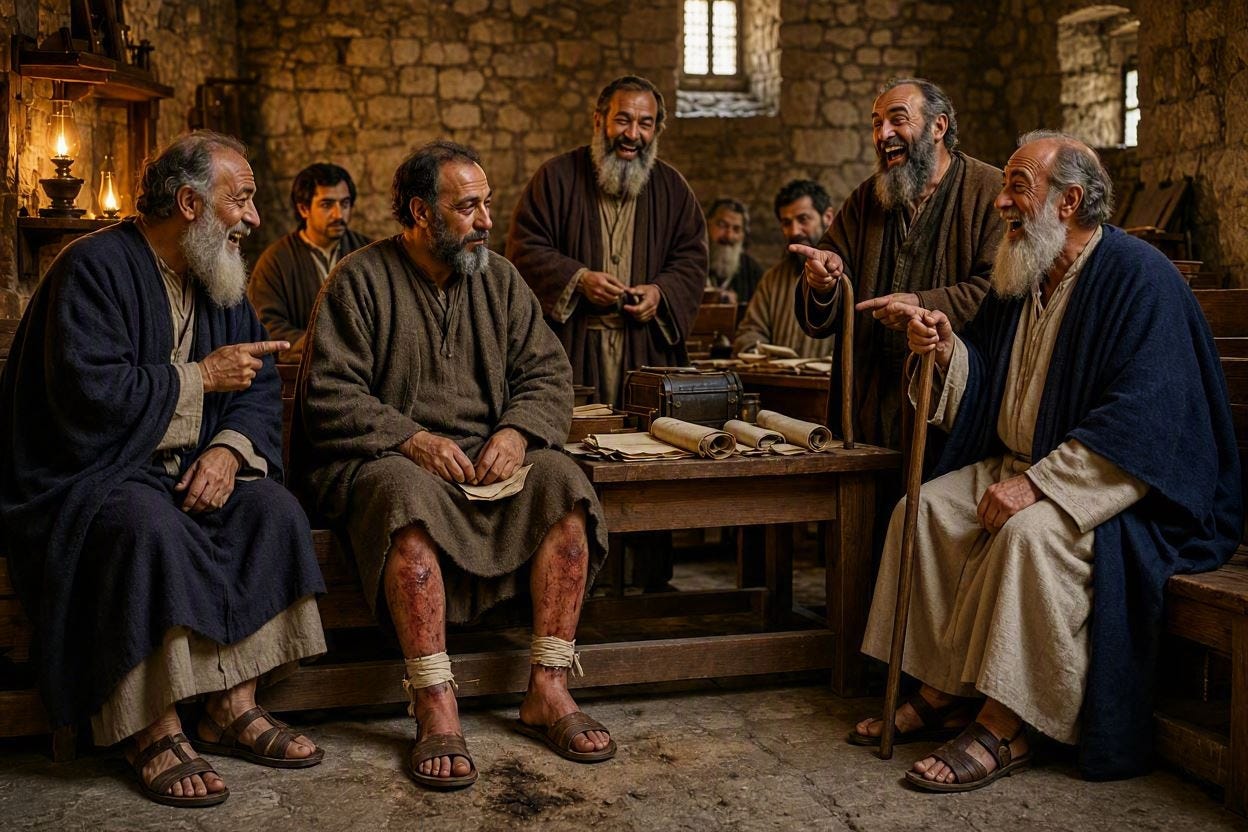
One day, the other sages gave him the evil eye, and his shins got singed by the fire, and from then on they called him katin harikh shakeih (the little one with the singed shins).
Does this story ridicule Rabbi Zeira or criticize his tormentors? On one hand, the description of his fasts does not appear to portray Rabbi Zeira in a particularly positive light; as with all three protagonists in our previous story, the self-mortification also reflects self-involvement. The first set of fasts suggests that he wants to leave behind his Babylonian learning to the point of forgetting it—and remember, we’re reading this story in the Babylonian Talmud! Ben Yehoyada has some conciliatory remarks about this:
ונראה בודאי שלא התפלל שישכח גוף התלמוד כי תורת אמת הוא רק רצה שישכח סדר הלימוד שלהם כי סדר לימודם זה בזה מוליד ומסבב שיריבו זה בזה בלימודם שכל אחד נכנס בדברי חבירו ומקשה לו רבות קודם שיתיישב בדבריו וגורם על ידי זה בלבול הדעת זה צועק מכאן וזה צועק מכאן וכיון דהורגל בלימוד זה בבבל מקטנותו וכל הרגל שהורגל בו האדם מקטנותו קשה עליו לפרוש ממנו לכך הוצרך להתענות ולהתפלל על עצמו שישכח אותו הסדר של הלימוד אשר הורגל בו ויערב לו סדר הלימוד של בני ארץ ישראל שהם נוחין זה לזה בהלכה ואין אדם נכנס לתוך דברי חבירו ואם חבירו אמר דבר של סברה לא יקפחנו בקושיות לסתור דבריו אף על פי שרואה קושיות בדבריו אלא יהיה מתוני להתיישב היטב בדברי חבירו ואדרבה הוא ישתדל לעשות להם קיום.
According to this, Rabbi Zeira did not want to forget the actual Talmud, but rather only the Babylonian study method, which apparently involved some rapid-fire exchanges, with people yelling eat each other. Rather, he wanted to adopt the more courteous style of Eretz Israeli learning, who are more patient and listen to each other, and rather than contradict or challenge each other, try to see things from each other’s perspective. In other words, he moved from something like the University of Chicago’s economics department to a more placid academic ecosystem, and had to do some cultural adjustments.
The second set of fasts is even more questionable: it is not out of concern for Rabbi Elazar’s wellbeing that Rabbi Zeira fasts, but rather to ensure that he is not burdened with Rabbi Elazar’s public duties. To the extent that these duties might have included the administration of charity to the poor, this might imply that Rabbi Zeira has not left all of his Babylonian sensibilities behind: as Alyssa Gray explains in her book on charity in Rabbinic Judaism, Babylonian rabbis tended to be rather discomfited by their encounters with the poor (see, e.g., b.Bava Batra 10a, b.Bava Batra 59a, b.Moed Katan 28a), and we’ve just read the Mar Ukva story, which shows a benefactor literally fleeing his grateful recipient. Eretz Israel rabbis were apparently more accustomed to interface with the poor, to the point that the poor proactively approached them (see, e.g., Va-Yikra Rabbah 34:7, y.Shabbat 6:10).
But it looks like, for his Eretz Israel colleagues, the third set of fast is what really cemented Rabbi Zeira’s reputation as insufferable. God, it seems, approved of the fasts, proof of which was Rabbi Zeira emerging unscathed from the oven every month. It was the other rabbis who jinxed him (Steinsaltz comments: out of envy). After he got burned, they could mock him not only for his small stature, but also for his singed shins.
The moniker, apparently, stuck, because Rabbi Zeira is referred to in this way elsewhere in the Talmud. A story in b.Sanhedrin 37a tells of his efforts to reform a group of local thugs:
הָנְהוּ בִּרְיוֹנֵי דַּהֲווֹ בְּשִׁיבָבוּתֵיהּ דְּרַבִּי זֵירָא, דַּהֲוָה מְקָרֵב לְהוּ כִּי הֵיכִי דְּנֶיהְדְּרוּ לְהוּ בִּתְיוּבְתָּא, וַהֲווֹ קָפְדִי רַבָּנַן. כִּי נָח נַפְשֵׁיהּ דְּרַבִּי זֵירָא, אָמְרִי: עַד הָאִידָּנָא הֲוָה חֲרִיכָא קַטִּין שָׁקֵיהּ דַּהֲוָה בָּעֵי עֲלַן רַחֲמֵי, הַשְׁתָּא מַאן בָּעֵי עֲלַן רַחֲמֵי? הַרְהֲרוּ בְּלִבַּיְיהוּ וַעֲבַדוּ תְּשׁוּבָה.
The thugs lived in Rabbi Zeira’s neighborhood, and he befriended them, in the hopes of getting them to repent their sins, but the other rabbis disapproved of his actions. The story uses the word kafdi (from the root קפד), which elsewhere in Talmudic storytelling implies actual anger. Anyway, when Rabbi Zeira died, the thugs said: “Until now, there was the short one with singed legs who would pray for compassion for us. Who will pray for compassion for us now?” They thought about this in their hearts and repented.
It looks like the thugs used the moniker half as a pejorative and half as a term of endearment of sorts. Gangsta’s Paradise indeed.