

Today’s our last comparative post in the oven series! To remind you of where we are, after introducing the material culture underlying the oven stories, we covered all five: Rabbi Tzadok and the Matronitha; Rabbi Hiyya bar Ashei and the fake courtesan Herutha; The Ukvas and the Panhandler; Shorty Singed-Shins; and Rabbi Prida’s Grandpa’s Wife and the Skull of King Jehoiakim. We examined the gender implications of the oven stories. After finding out that these stories are way outside of the rabbinic norms regarding self-mortification, we found some ascetic examples in the cultures that surrounded the Babylonian Talmud: Christianity, Zoroastrianism, and Manichaeism. We did not, though, find any direct parallels to crawling into an oven.
I’ve wavered about including Roman perspectives, and here’s why. There is a long history of commentary, much of it dating back to medieval times, about why the Babylonian Talmud acquired prominence over the Jerusalem Talmud. Unsurprisingly, the commentators are particularly interested in halakhic perspectives about the hierarchy of laws, the core and penumbra of laws, and who is the last authority on the subject:
The Rif notes that the Westerners (meaning, the Jerusalem rabbis) tend to be more stringent on halakhic matters, and the Babylonians more lenient. He figures that the Bavli amoraim were familiar with the material in the Yerushalmi, and if they were willing to modify down it’s because they did not consider the Yerushalmi binding, and thus neither should we.
The Rambam draws a distinction between the core and penumbra of law (HLA Hart’s concept of “core and penumbra”). The core is what was transmitted from Moses at Sinai. The penumbra, the “syag,” is what they said later, and there’s an extra layer of customs. What’s in the Bavli is at the heart of the consensus.
The Yad Rama”h and Rashbam both appeal to the fact that the redaction of the Babylonian Talmud is the last Talmudic word on the subject (dating a couple of centuries after the redaction of the Jerusalem Talmud), and thus is authoritative. At the time the rabbis were alive, we could go to them personally for clarifications, but all we have now is the written text and, therefore, that is what we must follow. As the Rashbam says - הא אין אדם רשאי לחדש דבר מעתה - a person may not innovate from now on.
But could it be that there are extraneous decisions for this, related to the Byzantine-Sasanian war, which took place in 602-628 CE?
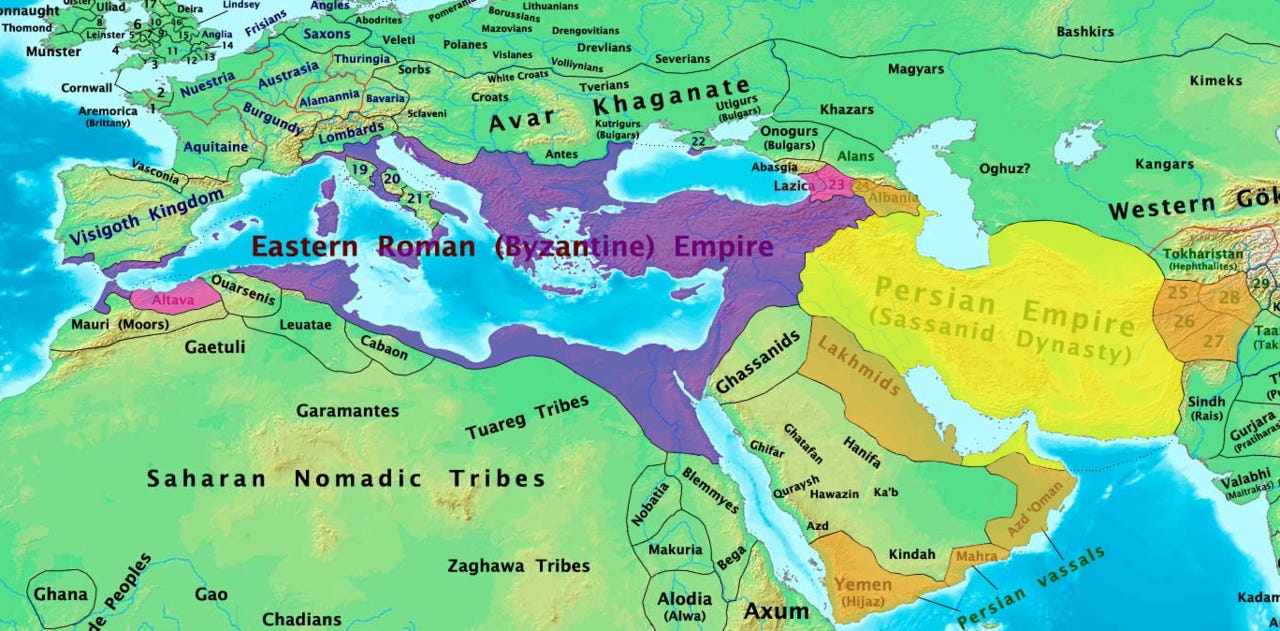
As you can easily discern from the map, before the Islamic conquest the territory including modern-day Israel, as well as the Galilee where the Jerusalem Talmud was redacted, was under Byzantine rule. The Babylonian Talmud was redacted, as we’ve already noted, within the bounds of the Sasanian empire. But as Seth Schwartz explains in Imperialism and Jewish Society, the war was not the original cause for the decline of the Jerusalem Talmud. The Yerushalmi's redaction was cut short in the Galilee in the mid-to-late 4th century, because Roman (then Byzantine) authorities progressively restricted Jewish civic and religious life. As Louis Feldman and Oded Irshai explain, the Theodosian Code focused on narrowing Jewish autonomy, and this was followed by abolishing the Palestinian Patriarchate around 425 CE, which had functioned as the central authority for Palestinian Jewry. This, to some extent, explains why the Yerushalmi was redacted the way it was: terse, laconic, unpolished, and full of unresolved threads,. The Bavli, by contrast, kept developing in Sasanian Babylonia largely undisturbed for another century and a half, through the work of the anonymous Stammaim who wove earlier material into the dense, dialectical, far more finished text we have now.
The Byzantine-Sasanian War, therefore, is better understood as a late-stage blow to the Yerushalmi study community. When Khosrow II’s forces took Jerusalem in 614, Palestinian Jews under Nehemiah ben Hushiel and Benjamin of Tiberias allied with the Persians, briefly gaining real autonomy in Jerusalem, before the Persians reversed course by 617 and cracked down on their former Jewish allies. Then Heraclius, after retaking the city in 628, reneged on assurances to the Jews and unleashed a punitive massacre against Jewish communities in Jerusalem and the Galilee.
Meanwhile, back at the ranch, both Sasanian Persia and Byzantine Palestine were absorbed into a single Islamic polity by the mid-7th century. The Babylonian Jewish institutions (the yeshivot of Sura and Pumbedita, home to the Babylonian Talmudic learning) had both greater continuity and, crucially, a functioning communications network across an empire that stretched from Iberia to Central Asia. As Robert Brody explains, this can account for the more illustrious afterlife of the Bavli: The Geonim used that network to answer legal queries from Jewish communities everywhere with rulings drawn from the Bavli, effectively exporting Babylonian legal culture as the default.
All of which is to say, I’m pretty sure that going to Roman-Byzantine culture to explain stories in the Bavli that do not have parallels in the Yerushalmi is a losing premise. Thing is, the story I have for today precedes the Byzantine empire by several centuries and dates back to the early days of the Roman Republic, which the Bavli redactors would’ve been well aware of. At this point I’m sure many of you are clamoring for me to bring the preamble to a close and tell the story already, for which I’m relying on several sources.
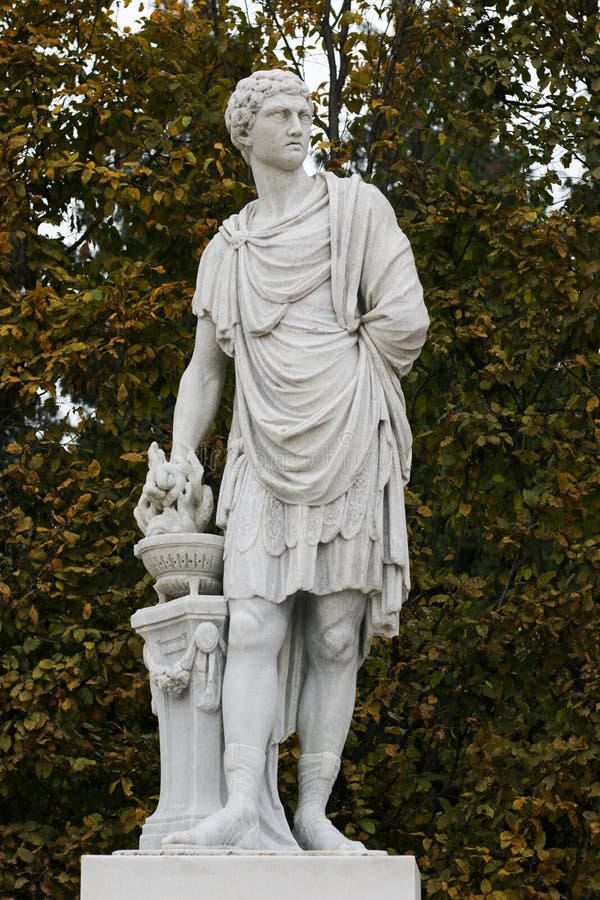
The story is apochryphal and these sources are basing their narratives on a writeup by Livy (Ab Urbe Condita, Book 2). We’re in 508 BCE, during the early Roman Republic’s war with the Etruscan king Lars Porsenna, who was besieging Rome to try to restore the exiled Tarquins to the throne. Anyway, Rome was under siege and running short on food. A young Roman noble named Gaius Mucius asked the Senate for permission to sneak into the Etruscan camp and assassinate Porsenna, hoping to break the siege by killing the king himself. He infiltrated the camp, but didn’t know Porsenna by sight, and therefore mistakenly killed the king’s scribe instead, who was dressed similarly and sitting beside the king handing out soldiers’ pay.
While he is now hailed as a hero, Mucius was unsurprisingly regarded a terrorist at the time, at least by the Etruscans, and was therefore seized and dragged before Porsenna. Rather than beg for his life, he reportedly declared himself a Roman citizen willing to die, announcing that he had intended to kill the king. If this seems like not much of an argument for mitigation, it was supported by a demonstration of Mucius’ contempt for pain: he reportedly thrust his right hand into a fire burning on a nearby altar and held it there without flinching while it burned, all while continuing to speak. The idea was to frighten Porsenna into believing him that hundreds of young Romans stood at the ready to make similar sacrifices to kill him. Porsenna, shaken by the display and the threat, ended the siege and made peace with Rome. After all this, Mucius was given the honorific Scaevola (“Lefty”) because the ordeal cost him the use of his right hand (my fabulous colleague Paul Belonick tells me that his advisors were convinced the family name “Lefty” was imposed for the obvious reason that someone was left-handed, and then later on they invented a heroic origin story).
If the Mucius story inspired our oven stories, I mostly see the similarity to the Rabbi Zeira story. In both cases, the fire serves as an ordeal tool rather than as punishment or mortification (as in the other oven stories), but notably, while Mucius is hailed as a hero, Zeira is mocked for his extreme pieties. Perhaps there’s some importance to the fact that Zeira came to the Galilee from Babylonia, where presumably going into the oven was not unheard of, and it was his Galilean colleagues that considered his behavior ridiculous. But, again, presumably if Zeira knew of the ancient Mucius story, so did the Galileans, so I’m not sure if that helps us understand why there were such cultural differences.
My comparative investigations, therefore, end this way: there is no doubt that the Babylonians had greater exposure to religions that valued ascetic practices (especially the Sasanians and the Manichaeans). But ascetic practices were also prevalent among monastic Christians, which would be known to Babylonians and Galileans alike. So I can’t think of a satisfying comparative/geopolitical explanation why these Bavli stories—as opposed to so many other examples of parallels—have no parallel in the Yerushalmi.
The next thing I’m going to do is look at the obvious allusions of the oven stories to the ovens of the afterlife (the fires of hell) and consider whether Bavli and Yerushalmi approaches to the afterlife differed to an extent that justifies the absence of oven stories in the latter.