

To modern readers, the oven stories read very jarring because of the more recent historical connotations that we have with the horrors of human incineration. But were these stories shocking at the time? Were they deliberately calibrated to shock? For this, we should turn to documentary evidence and figure out how common self-mortification practices were not only among Talmud-era teachers and their students, but also among the surrounding cultures. In this post we examine Jewish perspectives.
We’re approaching the High Holy Days, which brings to mind the most institutionalized form of self mortification: fasting. Beyond the biblical Yom Kippur fast, which includes other deprivations (יוֹם הַכִּפּוּרִים אָסוּר בַּאֲכִילָה וּבִשְׁתִיָּה וּבִרְחִיצָה וּבְסִיכָה וּבִנְעִילַת הַסַּנְדָּל, וּבְתַשְׁמִישׁ הַמִּטָּה, eating, drinking, washing, oiling one’s body, wearing leather, engaging in sexual pleasure—b.Yoma 73b), Talmudic sources feature communal fasts (ta’aniyot) in response to drought, plague, or disaster. These are elaborately regulated in tractate Ta’anit, where there are sequences of rain prayer stories involving (according to b.Ta’anit 15a) prayers, shofarot, and the citing of biblical stories that involved fasts as penitence—such as the atonement of the people of Nineveh in the Jonah story. We’ll get to these stories here in due time.
There was also individual fasting, sometimes as an antidote for a troubling dream. In b.Shabbat 11a, we find Rava citing Rav Hama citing Rav as saying that “a fast is as good for a dream as fire is to kindling,” meaning that it can burn off the disquieting effects of the dream. Rav Hisda adds that this is the case when fasting on the very day of the dream, and Rav Yosef tells us that it is okay to do this “dream fast” even on Shabbat.
There are multiple Talmudic descriptions of mortification as an expression of grief, one of the most famous of which is Rabbi Akiva’s announcement to his colleague, Rabbi Eliezer, that the other study hall companions were ostracizing him following the Achnai’s Oven debacle (b.Bava Metzia 59a). Rabbi Akiva dresses in black and wraps himself in black, sitting before his friend; after Rabbi Eliezer gets the bad news, he removes his shoes, tears his clothes, and places ash on his head—mourning practices that date back to the Book of Job.
It is widely believed that biblical concept of a nazirite—someone who might take vows to God that involve things like refraining from drinking or from cutting one’s hair (remember Samson?)—was not relevant to life during the Talmud period. In his article on the subject, Aharon Shemesh cites a fabulous Tannaitic story from Sifre Bamidbar 22 and t.Nezirut 4:7, which will remind you more than a little bit of the Narcissus story from Greek mythology:
Simon the Just said: I never ate a Nazirite guilt-offering in my life, except this one: A man came from the South, beautiful of eyes and good looking and his locks were arranged in curls. I said to him: “why did you choose to destroy this beautiful hair?” He said: “I was a shepherd in my town, and I went to fill water from the spring. I looked at my reflection and my heart rushed upon me, and sought to drive me from the world. I said to it: ‘Evil one! You are taking pride in what is not yours, that which is destined to become dust, maggot and worm. Behold: I shall shave it for the sake of heaven.’ ” I then lowered his head and kissed him on the head and said to him: “May there be many like you, those who do the will of the Omnipresent, in Israel. And by you has been fulfilled When either man or woman shall vow exceptionally, to vow a vow of a Nazirite, to separate oneself to the Lord.” (Num. 6:2)
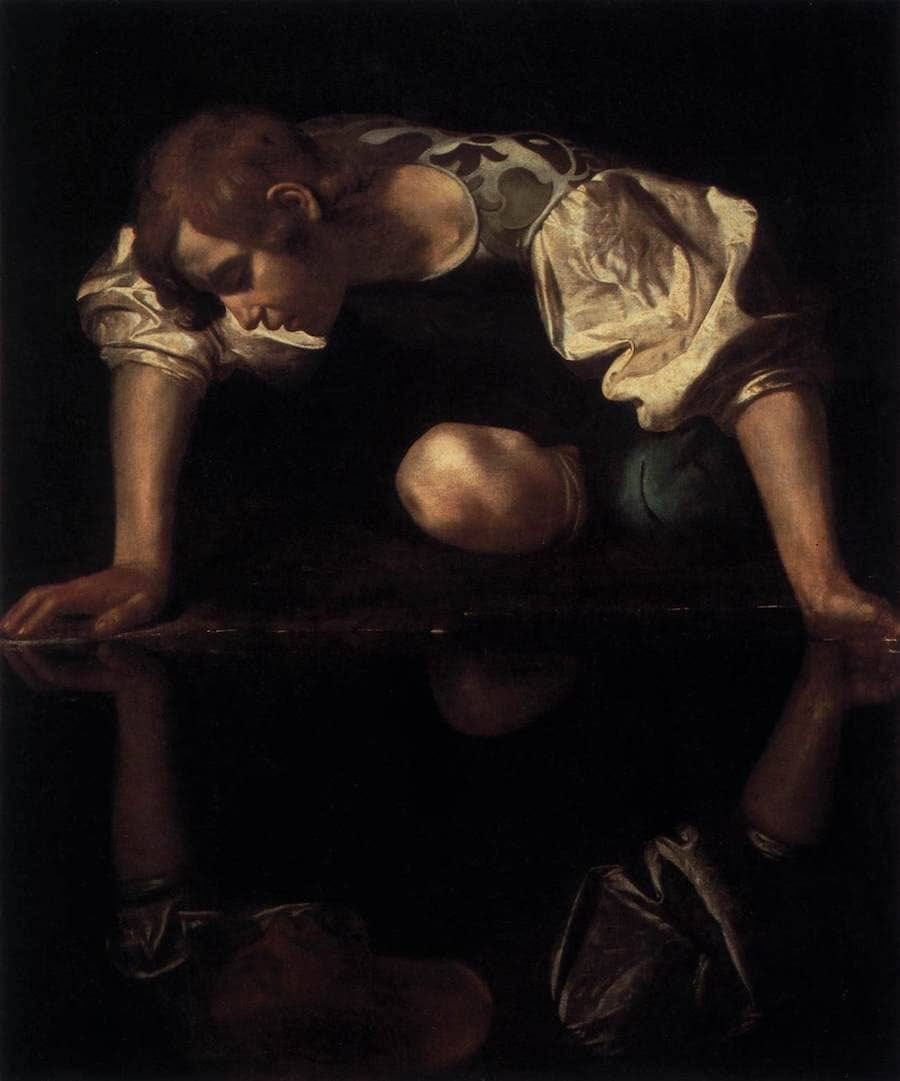
There’s a lot here that is interesting, not the least of which is that the nazirhood practice of growing your hair is not a deprivation here; rather, it creates a danger of vanity, and that’s why Simon the Just did not approve. There’s a dispute among commenters on this story whether Simon was, generally, opposed to nazirite practices, or this just happened to be the only nazirite he encountered.
Shamash then cites b. Ned. 10a, which has led some to believe that nazirite practices were negatively regarded (also see b.Nazir 19a; b.Ta’anit 11a), but when read more carefully might lead to the conclusion that they only disapproved of nazirites who did not live up to the difficult vows they vowed (for reasons we’ve already discussed elsewhere, the Talmud strongly discourages people from making promises they cannot deliver, and this might be a facet of that). Shamash reasons that the rabbis simply did not regard nazirhood an ascetic practice.
The emerging picture is that, with the exception of fasting, the Jewish tradition as preserved in the Talmud generally shies away from self-mortification. There are resentments against permanent self-maiming and exhortations to maintain the body, rather than punish it. This point is made even more forcefully in Daniel Boyarin’s book Carnal Israel, where he contrasts this body-affirming approach to the body-denying, body-versus-spirit ideology of Christianity during those times. Which brings up three important questions:
(1) What were the approaches to self mortification in Syriac Christian, Roman, Zoroastrian, Sasanian, and perhaps even Manichean cultures, which surrounded the rabbis in Babylonia? Were they more sanguine about this?
(2) If so, would the Babylonian rabbis be influenced by these surrounding cultures to have a more ambivalent approach about them? Or perhaps they might guard against them more forcefully to resist the temptation to assimilate in this manner?
(3) And if so, could that be the reason why the Babylonian oven stories do not have parallels in the Jerusalem Talmud?
Stay tuned!